A First-Day Plan for a Neighbourhood Skill Share
A neighbourhood skill share plan keeps short demonstrations, hands-on practice and questions manageable, so newcomers can take part without pressure.
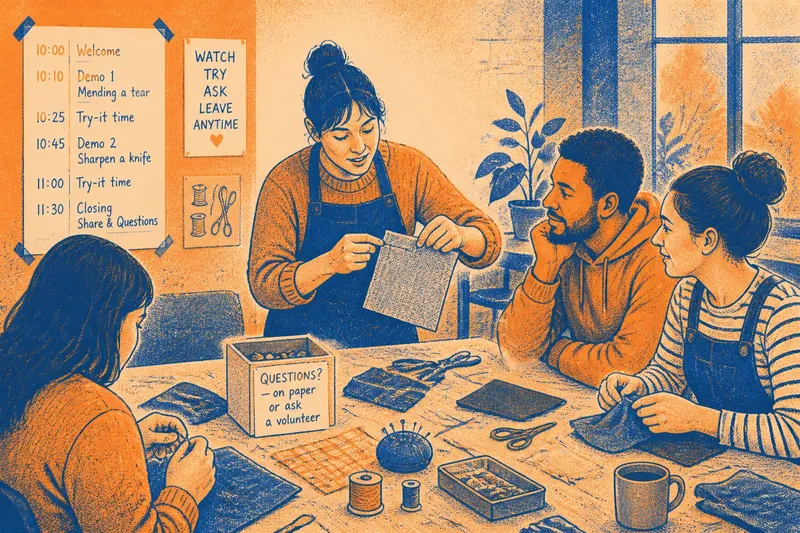
The common mistake at a neighbourhood skill share is letting demonstrations run until the room has become an audience and the useful tools are already packed away. A neighbourhood skill share plan should protect time for trying things, asking questions and leaving early if needed. That is the difference between watching someone do a task and learning enough to attempt it yourself.
This plan is for a small, informal session with a few volunteer demonstrators and a mixed group of neighbors. It works best when the gathering has one clear purpose, such as mending a loose button, sharpening kitchen knives, or making a simple paper repair. Keep the scope modest; a first gathering does not need to settle the future of practical knowledge.
What should be settled before the day?
About a week ahead, choose a central theme that can be shown in brief, self-contained demonstrations. Ask each volunteer to describe what they can show, what materials they need, and what a participant will be able to try. Avoid inviting a specialist to cover an entire field. “Patch a small tear” gives people a useful picture; “textiles” does not.
Agree on the session’s limits with the demonstrators. A skill share is not a certification class, a sales table or a promise that every visitor will leave proficient. If a proposed activity involves blades, heat, chemicals, electrical equipment or another meaningful hazard, choose a safer topic for this gathering or have a qualified person determine whether it is suitable. Follow relevant product instructions and local rules where they apply.
Ask volunteers to bring only the tools and materials they can comfortably manage. A repair demonstration might need scrap fabric, needles, thread, scissors and a finished sample. Set aside extra materials for practice, and keep the demonstration version distinct from the practice supplies so the group does not have to wait while one needle travels around the room.
Reserve a familiar, accessible local room, such as a library meeting room or community center space, and confirm the practical arrangements with its staff. Check the available tables, chairs, lighting, washroom access, and any limits on food, equipment or room use. You do not need to design an elaborate program or make matching signs for every surface. A legible paper schedule and clear labels on materials are enough.
How should the session unfold?
For a morning gathering, plan roughly two hours, with a little time on either side for setting up and packing away. The schedule below is a working shape, not a test of punctuality. If people arrive gradually, let the opening activity absorb that rather than making late arrivals feel as though they have missed the important part.
- Before doors open: Arrange each demonstration station with its sample, tools and practice materials. Put the schedule where arrivals can see it, and mark a quiet place for coats, bags or a break. Ask a volunteer to welcome people and explain where the toilets and exits are.
- Opening, about ten minutes: Welcome everyone, name the day’s skill and explain how the session works. Tell people they may watch, try, ask a question, take a break or leave without explaining themselves. Invite demonstrators to introduce their activity in one sentence.
- First demonstration, about fifteen minutes: Show one task at a pace people can follow. The demonstrator should name the materials, make the key movements visible, and point out a common difficulty without turning the session into a lecture. Leave a little space for a few questions, then direct people to the practice materials.
- Try-it time, about twenty minutes: Let participants work at their own pace. The volunteer can circulate and offer help, but should ask before taking over someone’s work. People who prefer not to handle the materials can observe, talk through the process or simply take a break.
- Second demonstration and practice: Repeat the short demonstration-and-practice pattern for another skill. If there is only one demonstration, use this time for another round of practice, a change of materials, or informal questions instead of adding a rushed extra topic.
- Closing, about fifteen minutes: Invite people to name one thing they learned, one question they still have, or one skill they would like to see another time. Make each option voluntary. Explain what will happen to leftover shared materials and how people can hear about a possible next gathering.
- After participants leave: Return the room to the condition required by the venue. Gather reusable materials, dispose of waste appropriately, and check with volunteers before sharing anyone’s contact details or photographs.
Say you have three volunteers, but one arrives with a demonstration that needs much more explanation than expected. Keep the original short demonstration slot, ask the volunteer to show one useful portion, and move the rest into an optional conversation during practice time. The observable result should be that participants still have an opportunity to try the skill, while anyone curious about the extra detail can stay and talk.
How can questions stay low-pressure?
Not everyone wants to speak in front of a group, and a skill share should not make public confidence a prerequisite for participation. Offer a few ways to ask: directly during practice, on a scrap of paper, or privately to a volunteer. A small box or envelope can collect written questions. Read them aloud only when the writer has not asked for a private response.
Demonstrators can help by pausing after showing a key movement and asking a specific, answerable question, such as “Would it help to see that knot again?” This is easier to answer than a broad “Any questions?” Leave a moment for silence; people sometimes need time to decide what they want to ask, and the first person to speak need not be appointed by fate.
When someone’s question goes beyond the volunteer’s knowledge, say so plainly and offer a sensible next step, such as checking a manufacturer’s instructions or asking a qualified professional. Do not turn uncertainty into improvised advice, especially where safety, health or legal matters are involved.
What if the plan changes on the day?
A small gathering is easier to adjust when each activity can stand on its own. If a demonstrator cancels, remove that slot and extend practice time or invite people to compare what they noticed at the remaining station. If attendance is sparse, keep the same welcome and schedule but let the group gather closer to the demonstration. If more people arrive than the supplies can support, make watching and asking questions legitimate options rather than promising every person a turn with every tool.
For a participant who arrives late, give a brief, quiet explanation of what is happening and point out the current activity. Do not stop the room for a second opening unless a new arrival needs information essential to taking part. That small courtesy keeps the session legible without making the latecomer the center of it.
If a task becomes unsafe, unclear or too ambitious for the time available, pause it. The volunteer can switch to showing a finished example or explaining the materials, while participants continue with a safer activity. A demonstration is not improved by pressing ahead merely because it appears on paper.
What questions come up before a first skill share?
How many skills should a first session include?
One or two short demonstrations are usually enough for a small gathering. Choose activities that leave room for practice rather than filling the schedule with subjects that participants can only watch.
Should people bring their own tools?
Make that optional, and say clearly what shared materials will be available. If a particular tool is needed, tell people beforehand and offer an alternative way to observe or participate.
How should a volunteer respond when they do not know an answer?
They can say they are unsure and avoid guessing. If the question concerns safe use, product instructions or professional work, direct the person to an appropriate qualified source rather than improvising.
What should happen after the gathering?
Ask volunteers what they would change, note which materials were useful, and share any next-date information only if it has been agreed. Keep feedback brief and voluntary; a small event does not need a committee report with its own committee.
What is not worth the effort?
Skip elaborate name badges, a long introductory speech and a packed timetable of unrelated activities. They consume attention without helping someone learn a stitch, sharpen a tool or ask a useful question. A clear welcome, visible demonstrations and enough practice time do the substantive work.
For a neighbourhood skill share, the useful measure of a first day is whether people could understand what was happening and choose how to participate. Keep the schedule, volunteer notes and one or two observations about the room for the next gathering. That modest record can make the next session easier to host without turning a neighborly exchange into an administrative hobby.